
Is Buying a Lot in Palm Coast, FL With Gopher Tortoise Burrows Still a Good Idea?
The situations described here are composites drawn from the types of jobs and decisions we encounter regularly. Names and specific figures are illustrative.
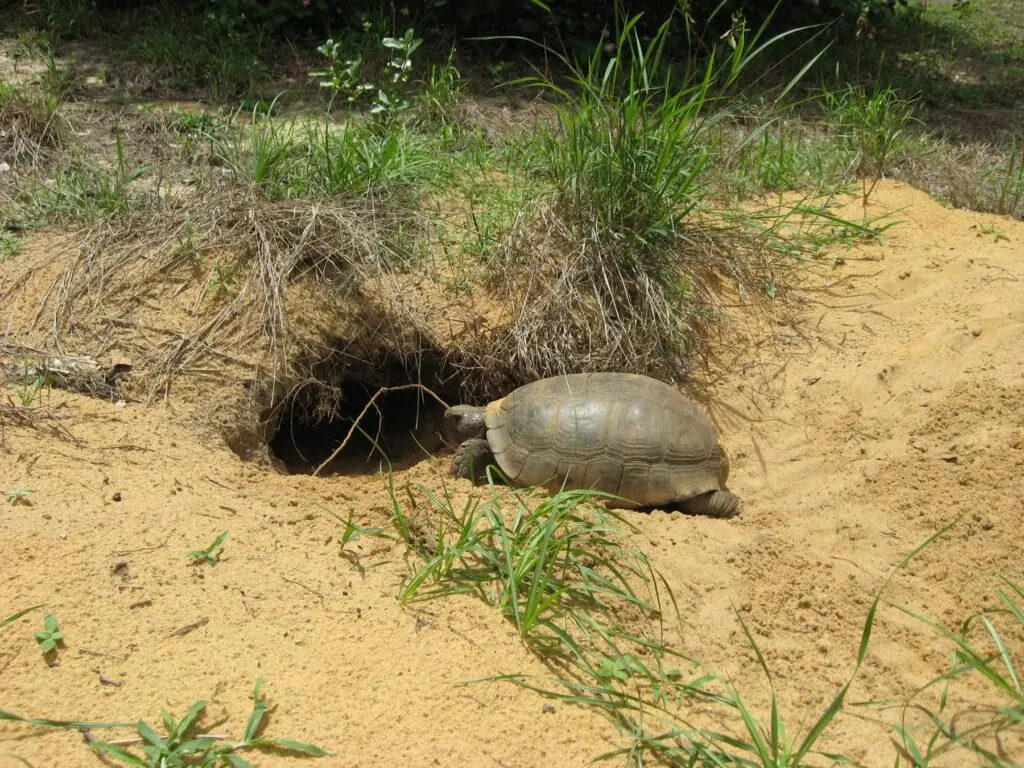
A couple relocating from Ohio had a wooded interior lot in Matanzas Woods under contract, with a 15-day inspection period and a plan to build a Cecile, a 2,650-square-foot single-story home. On their second walk of the lot they found two half-moon-shaped holes in the sand with loose soil fanned out in front of them. Those were gopher tortoise burrows. The question that landed on our desk was simple: does this change whether they should keep going with buying a lot in Palm Coast, FL, and if they keep going, what does it cost them in money and time?
The short answer is that burrows do not make a lot unbuildable. They do make it a lot with a state permit attached, or a lot where the house has to sit in a particular spot. Gopher tortoises are listed as Threatened in Florida, both the tortoise and the burrow are protected by state law, and a relocation permit from the Florida Fish and Wildlife Conservation Commission (FWC) is required before burrows are disturbed or construction starts.[1] That was the part they had not heard before.
What they found on the second walk
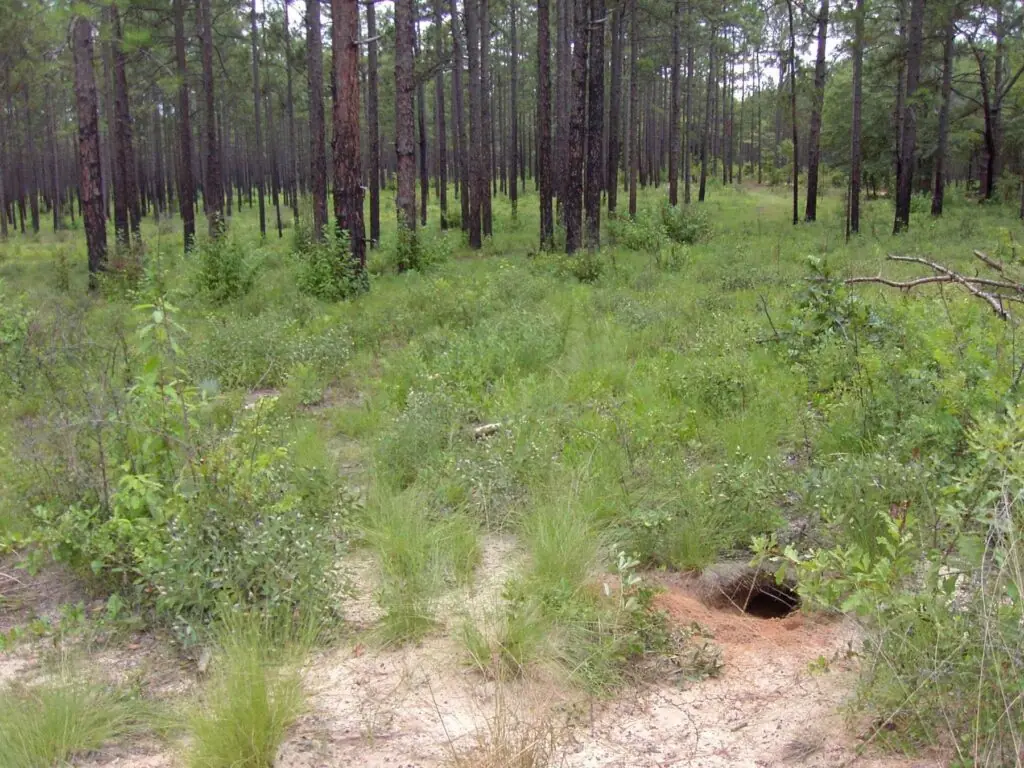
Matanzas Woods, like a lot of the northern sections of Palm Coast, has sandy, well-drained lots with pines and scrub. That is the kind of ground tortoises like. Many lots that have sat vacant for years have a burrow or two on them, and many buyers walk right past them because they are hidden under palmettos or look like an armadillo hole.
The way to tell the difference is the shape. FWC describes an active tortoise burrow as having a half-moon-shaped entrance, a gently sloped tunnel and an apron of loose soil, often with tracks, and entrances that range from about 2.5 to 15 inches wide depending on the size of the tortoise. Armadillo burrows tend to be round or oval and drop steeply.[2] A burrow with leaves in the mouth and hard-packed sand is not automatically empty either. FWC still treats a half-moon burrow that looks unused as potentially occupied, and notes that occupied burrows can look inactive in the cooler part of the year when tortoises spend more time inside.[2] That matters for anyone walking lots between now and spring, which is when a lot of relocating buyers come down to look.
One burrow sat near the back middle of the lot, roughly where the Cecile’s covered lanai would go. The second was on the neighbor’s vacant lot, a few feet past the side property line.
Why the burrow is not just a hole in the yard
The couple’s first reaction was that they could fill the hole in after closing. That is the misconception worth correcting early. FWC’s rule is that a permit is needed for any work that would disturb a potentially occupied burrow, and disturbance includes any type of work within 25 feet of the burrow: clearing, grading, construction, even parking a bulldozer.[1] The agency’s program page puts it plainly: tortoises have to be relocated before land clearing or development, and the property owner needs an FWC permit before anyone captures or moves one.[3] FWC also notes that tortoise burrows are shared with more than 350 other species.[3]
The neighbor’s burrow was the one they had not thought about at all. FWC’s own FAQ addresses this exact situation. The agency cannot authorize you to relocate a tortoise from land you do not own, but if your clearing comes within 25 feet of a burrow on the next lot and collapses it or harms the tortoise, you can still be held responsible.[4] So that burrow was going to shape where the driveway and the side yard went, permit or no permit.
The three options on the table
With nine days left in the inspection period, we laid out what each path would look like. The figures in the last column are the ones the couple worked with, not quotes from any particular agent.
| Option | What it required | What it meant for this couple |
|---|---|---|
| Walk away | Cancel inside the inspection period and keep looking | Deposit back, but another round of lot shopping, and the next wooded lot could have burrows too |
| Avoid both burrows by 25 feet | No permit needed if clearing, grading, construction and equipment all stay 25 feet away[1] | The Cecile would not fit. A smaller plan pushed to the front of the lot might |
| Permit and relocate the back burrow | 10 or Fewer Burrows permit, a mitigation contribution, and relocation on-site or off-site[5] | Keep the Cecile, pay the permit and agent costs, and plan the clearing date around the survey window |
Walking away was a real option and we said so. Some buyers do not want a state permit tied to their first step, and that is a fair reason to pass on a lot. But this couple liked the street, and the lot had the trees they wanted to keep along the back.
Could the house move instead of the tortoise
Avoiding the burrows is the cheapest path when it works, so we tried it first. We sketched the lot with a 25-foot circle around each burrow. The circle around the back burrow took a bite out of the middle of the buildable area. The circle around the neighbor’s burrow clipped the side yard where the Cecile’s garage would sit. A smaller plan like the Amelia, at 1,950 square feet, could fit if it were pushed toward the front setback and the garage were flipped to the other side.
That was the point where spending less stopped making sense for them. They wanted the Cecile’s room for visiting kids and its covered lanai with a summer kitchen, and giving up 700 square feet to save a permit was not a trade they wanted. The Amelia was a good fit for a different couple. It was not the house they were moving for.
The garage flip still made sense, though. Turning the Cecile’s garage to the far side kept all clearing and the driveway more than 25 feet from the neighbor’s burrow, which took the off-property burrow out of the picture entirely.
“Clients can bring us a lot they already own, or we help them find one. Either way, the state rule is the same on every lot: if the work comes within 25 feet of a potentially occupied gopher tortoise burrow, the FWC permit comes before the clearing.” [1]
Owner, Wise Choice Custom Homes
What the permit actually involved
For a lot with ten or fewer burrows, FWC has a specific permit called the 10 or Fewer Burrows permit. The tortoises can be moved to another part of the same property if suitable habitat will remain after construction, or off the property to a permitted recipient site.[5] On-site sounds simpler, and it is cheaper, but the rules are specific. The recipient area has to be at least 750 square feet of suitable habitat and at least 10 feet wide, half of it at least 25 feet from the construction boundary, and suitable habitat means sunny, sandy, open ground with plants to eat and protection from dogs, cats and busy roads.[5]
The couple were moving down with two dogs and planned a fenced backyard. That settled it. An on-site strip behind the lanai would not have met the habitat standard, so the tortoise would go off-site. Off-site relocation requires an FWC Authorized Gopher Tortoise Agent, who charges a fee, and a recipient site, which also charges a fee to accept the tortoise.[5] On top of that is the mitigation contribution to FWC, which is the same whether the tortoise moves on-site or off.[5] In FWC’s 2023 permitting guidelines that contribution is a flat $234 for a 10 or Fewer Burrows site, applied once per project, and the agency adjusts its mitigation amounts for inflation each year.[6]
Before the inspection period ran out, they called two authorized agents for prices and asked the seller for a short extension so the agent could walk the lot. That extension was the most useful thing they negotiated. It turned an unknown into a number before they closed.
How the timing fit around the build
The part buyers underestimate is the calendar. FWC’s guidelines ask that paper applications go in at least 90 days before the permit is needed and say most are processed in 45 days or less. They also say that if construction does not start within 90 days of the most recent full burrow survey, the lot has to be surveyed again, because tortoises move.[6] In practice that means the survey, the permit and the clearing date have to be lined up with the plans and the city building permit, not handled as a separate errand months earlier.
| Step | When it happened for this couple |
|---|---|
| Burrows found, extension requested | Day 6 of the inspection period |
| Agent walks the lot and quotes | Within the extension, before closing |
| Closing on the lot | After the agent’s price was in writing |
| Full burrow survey and permit application | Timed so clearing could start inside the 90-day survey window[6] |
| Capture, relocation, then clearing | Clearing only after the tortoise was moved and silt fencing was up |
FWC recommends temporary silt fencing around the work area whether a permit is required or not, so tortoises do not wander back into the site once construction starts.[1] On this lot the fence also ran along the side line facing the neighbor’s burrow. Lot clearing, surveys and soil tests are part of our standard features, so the work that changed was the order of it, not the scope.
What people usually ask at this point
The first question is almost always whether the seller should have said something. Sometimes the seller has never walked the lot. Either way, the inspection period is the buyer’s window, and a slow walk of the whole lot, including the edges, is the cheapest inspection there is.
The second is whether they could just move the tortoise themselves. For an on-site move under a 10 or Fewer Burrows permit, a landowner can do the capture after completing FWC’s online training. Off-site moves need an authorized agent.[5] FWC staff do not do relocations for private projects.[4]
The third is whether a burrow lowers the value of the lot. We do not have a clean answer to that. What we see is that it changes the buyer’s cost and calendar, and that is worth knowing before the price is final, not after. Most couples who ask us about lots are also comparing what a canal lot’s flood zone changed for another Palm Coast build, and the lesson is the same: the site sets limits before the floor plan does.
Where the couple ended up
They closed on the Matanzas Woods lot. The Cecile went ahead with the garage on the opposite side, the back burrow’s tortoise was moved off-site under a permit before any clearing, and the neighbor’s burrow stayed exactly where it was, behind a silt fence and more than 25 feet from anything we touched. The permit and agent costs went into the budget as a line item, the same way fill or a tree removal would.
If they had found the burrows after closing, nothing about the rules would have been different. What would have been different is that the cost and the timing would have arrived as a surprise instead of a number they had already accepted. For anyone shopping wooded lots this fall, the takeaway is narrow: walk the whole lot, look for half-moon openings with sand in front of them, and if you find one, get it priced while you can still say no. That is a normal part of buying a lot in Palm Coast, FL, not a reason to panic.
If you are looking at a lot and want a builder to walk it with you before you close, you can reach out to Wise Choice Custom Homes here.
Sources
- Gopher Tortoise Permits, Florida Fish and Wildlife Conservation Commission
- How to Identify a Gopher Tortoise Burrow, Florida Fish and Wildlife Conservation Commission
- Gopher Tortoise Program, Florida Fish and Wildlife Conservation Commission
- Gopher Tortoise Permitting Frequently Asked Questions, Florida Fish and Wildlife Conservation Commission
- 10 or Fewer Burrows Permit, Florida Fish and Wildlife Conservation Commission
- Gopher Tortoise Permitting Guidelines (revisions effective April 2023), Florida Fish and Wildlife Conservation Commission